

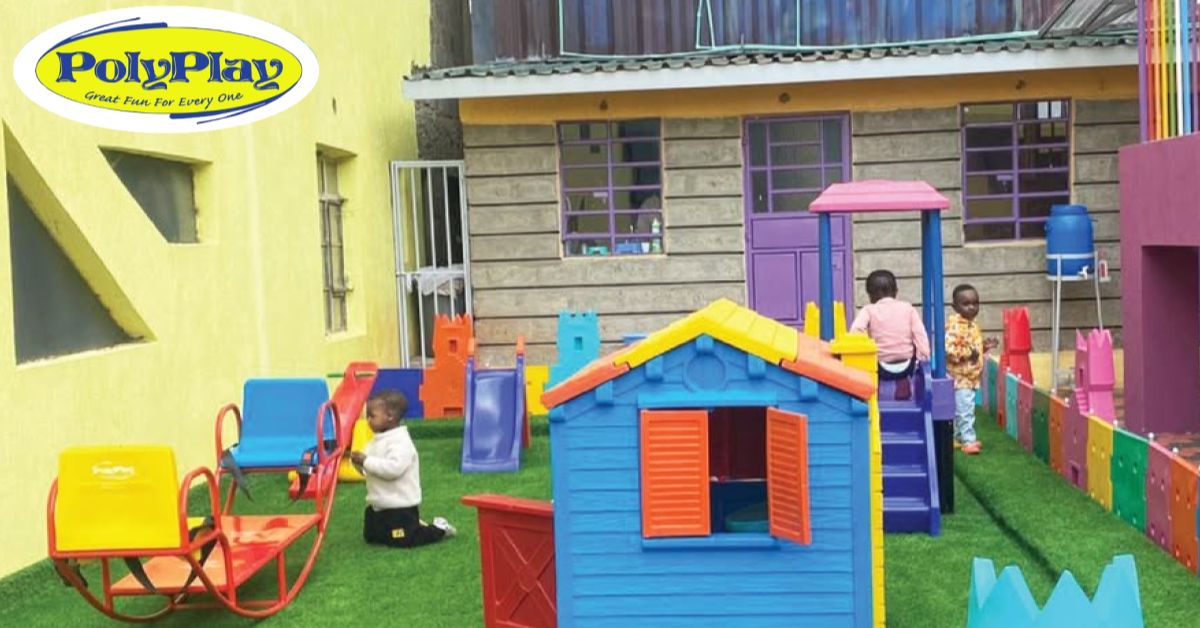
A school serves as an educator in the traditional educational system, with the primary goal of academic excellence; however, the overall development of the child, including physical health, social intelligence, and emotional resilience, is not given the same importance. A school playground is at the heart of this development.
A good school playground becomes a means of transition, taking the most straightforward outdoor play space and turning it into a lively place where children learn in the most instinctive way possible. As schools in Kenya and across the region continue to upgrade their facilities, there has never been a greater need for safe, enjoyable outdoor play areas. Moreover, purchasing the right playground equipment for schools is not only an option for beautifying the school but also a pledge to the students’ welfare and future well-being.
Play has often been dubbed the “labour” of childhood. In fact, children discover and learn about their environment primarily through play, and they also set boundaries and play with friends. By providing children with well-planned, well-thought-out equipment, schools are essentially giving children a structured yet supportive environment in which to acquire essential life skills.
One of the most significant immediate advantages of playground equipment for schools is that it helps students become physically active. Today, as people become more sedentary and spend more time in front of screens, a playground is a place where kids can run and release their pent-up energy. Swings, slides, and climbing frames are used for physical movement and for physical and mental growth.
| Physical Benefit | Description |
|---|---|
| Strength Building | Climbing and monkey bars build a strong core and upper body. |
| Coordination | Navigating complex play stations improves hand-eye coordination and spatial awareness. |
| Cardiovascular Health | All that running and jumping gets their heart racing, which is the best way to build up stamina without it feeling like a workout. |
| Balance | Things like beams and wobbling bridges teach kids how to stay steady on their feet and keep their balance when things get shaky. |
Besides the material aspects, the playground is a social laboratory. It is here that children learn the subtle points of human interaction. Whether it is standing in line for the slide or sharing ideas to navigate a multi-user game, students are constantly socialising.
Building a great playground is a balancing act. You need a space that keeps kids excited and moving, but it has to be backed by solid safety standards and a real understanding of how children actually play. A successful school playground should cater to a wide range of ages and abilities, ensuring that no child is left on the sidelines.
School playground equipment must be designed for the students’ developmental stages.
Playground design is moving away from the old “one-size-fits-all” approach. These days, it’s all about creating spaces that feel more natural and serve more than one purpose. Real inclusivity is at the heart of this shift. It isn’t just about the standard swings and slides anymore.
You really have to consider the kids who often find themselves on the outside looking in. It might mean putting in a ramp so everyone can reach the equipment or maybe adding sensory areas for those who prefer a different kind of play. Even something as simple as a quiet corner can change the whole experience. The idea is to get rid of those barriers so every student, no matter their ability, actually gets a chance to just be a kid.
You really can’t cut corners when it comes to the quality of a school’s playground. Providing a space that’s both safe and engaging is one of the most direct ways a school can support a child’s physical growth and emotional health. Inclusive design and sustainable materials aren’t just extras. They’re what turn a standard playground into a place where students actually want to be.
Working with a reputable supplier like Polyplay is the best way to ensure you’re getting equipment that’s built to last, stays safe under heavy use, and—most importantly—is something the students will genuinely enjoy for years to come.
Playground equipment keeps children physically active, helps them interact socially, and challenges their minds; thus, children ultimately become physically more assertive, more self-assured, and learn essential life skills such as teamwork and problem-solving.
Safety features are implemented by choosing premium, sturdy materials, ensuring expert installation, conducting regular maintenance through inspections, and following international safety standards and regulations.
Polyplay’s recycled plastics are not only tough, but they also handle heavy use and rough weather without falling apart, unlike traditional materials that wear down fast. Besides that, students learn the importance of sustainability.
Definitely. Modern play systems are designed like building blocks, so you can scale them up or down depending on what you’re working with. Whether you have a small corner for a preschool or a massive field for a secondary school, you can mix and match different units to fit your specific space, student numbers, and budget without feeling like you’re wasting room.
A good playground has to work for everyone, which usually means grouping gear by age. Toddlers (0 to 4) do best with simple sensory toys, while primary kids (5 to 12) need the challenge of bigger climbing frames.